

Which vitamin deficiency causes Hair Loss
If you’re experiencing hair loss, you’re not alone. It’s a common problem that affects millions of people worldwide. While there are many potential causes, one often overlooked culprit is vitamin deficiency. As your hair grows, it relies on necessary nutrients to stay healthy and strong. But if you’re not getting enough of these vital vitamins, it can lead to brittle, thinning, or even falling hair. In this tutorial, we’ll explore the specific vitamin deficiencies that can cause hair loss, and what you can do to prevent it.
Understanding Hair Loss
While you may think of hair loss as a problem that only affects older men, the reality is that it can affect anyone, regardless of age or gender. Hair loss can be a frustrating and embarrassing issue, but understanding the underlying causes is the first step towards finding a solution. The big question is Which Vitamin deficiency causes Hair Loss?
The Science of Hair Growth
Meanwhile, your hair grows in cycles, with three distinct phases: anagen, catagen, and telogen. The anagen phase is the active growth phase, during which your hair grows rapidly. The catagen phase is a short transitional phase, and the telogen phase is the resting phase, during which your hair is released from the follicle. A healthy scalp typically has around 80-90% of hairs in the anagen phase.
Common Causes of Hair Loss
Meanwhile, you may be surprised to learn that hair loss can be caused by a variety of factors, including genetics, hormonal imbalances, certain medical conditions, and even your diet. Hair loss can also be triggered by stress, thyroid disorders, and autoimmune diseases.
Understanding the common causes of hair loss is crucial in determining the best course of treatment. For example, if your hair loss is caused by a hormonal imbalance, treating the underlying hormonal issue may help to restore your hair growth. Similarly, if your hair loss is caused by a nutrient deficiency, supplementing your diet with the necessary vitamins and minerals may help to promote hair growth. By identifying the underlying cause of your hair loss, you can take the first step towards finding a solution that works for you.
Vitamin Deficiencies and Hair Loss
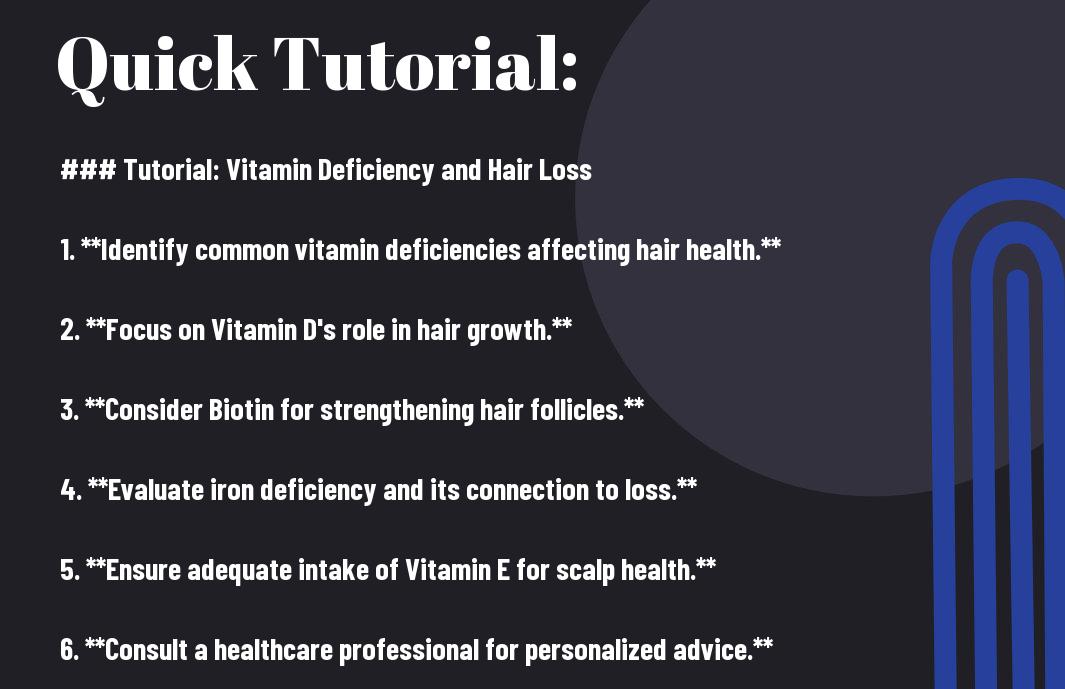
Assuming you’re experiencing hair loss, it’s imperative to consider the role of vitamins in your hair health. While there are many factors that contribute to hair loss, vitamin deficiencies are a common underlying cause.
The Role of Vitamins in Hair Health
Some vitamins play a crucial role in promoting healthy hair growth. They help to nourish your hair follicles, strengthen your hair strands, and maintain the overall health of your scalp. Without sufficient vitamins, your hair may become weak, brittle, and prone to breakage, leading to hair loss.
The Most Common Vitamin Deficiencies Associated with Hair Loss
Even a mild deficiency in certain vitamins can cause hair loss. The most common vitamin deficiencies associated with hair loss include iron, zinc, biotin, vitamin D, and omega-3 fatty acids.
Loss of hair can be a distressing experience, but identifying the underlying vitamin deficiency can help you take corrective action. For instance, iron deficiency is a common cause of hair loss in women, particularly those with heavy menstrual periods. Similarly, a lack of vitamin D has been linked to alopecia areata, an autoimmune condition that causes hair loss. By addressing these deficiencies, you can promote healthy hair growth and reduce the risk of hair loss. Note, early detection and treatment are key to preventing further hair loss.
Vitamin D Deficiency and Hair Loss
Your hair health is closely linked to your overall well-being, and vitamin D plays a significant role in maintaining healthy locks.
The Importance of Vitamin D for Hair Growth
To promote healthy hair growth, vitamin D is crucial. It helps regulate the growth cycle of your hair follicles, ensuring that your hair grows at a normal rate and doesn’t enter the resting phase too quickly. Vitamin D receptors have been found in hair follicles, highlighting its crucial role in hair growth.
How Vitamin D Deficiency Leads to Hair Loss
For individuals with vitamin D deficiency, hair loss can become a significant concern. When your body lacks sufficient vitamin D, it can disrupt the normal hair growth cycle, leading to excessive shedding and hair loss.
Loss of hair due to vitamin D deficiency can be particularly alarming because it can be a symptom of a more underlying issue. Vitamin D deficiency has been linked to autoimmune diseases such as alopecia areata, which can cause patchy hair loss. Furthermore, vitamin D deficiency can also lead to inflammation, which can exacerbate hair loss. Studies have shown that vitamin D supplementation can help promote hair growth and reduce inflammation. If you’re experiencing hair loss, it’s crucial to consult with a healthcare professional to rule out underlying vitamin D deficiency.
Iron Deficiency and Hair Loss
Once again, we’re looking at a crucial nutrient that plays a significant role in maintaining healthy hair. Iron deficiency is a common nutritional disorder that can lead to hair loss, and it’s crucial to understand how it affects your hair growth.
The Crucial Role of Iron in Hair Production
Any imbalance in iron levels can disrupt your hair’s growth cycle. Iron is necessary for the production of hemoglobin, which carries oxygen to your hair follicles. Without sufficient iron, your hair growth slows down, and you may experience hair loss.
The Link Between Iron Deficiency and Hair Loss
Deficiency in iron can lead to hair loss, particularly in women. When your body lacks iron, it redirects oxygen to crucial organs, leaving your hair follicles oxygen-deprived, resulting in hair thinning and loss.
It’s crucial to note that iron deficiency can cause hair loss in two ways. Firstly, it can lead to telogen effluvium, a condition where there is a sudden increase in the number of hair follicles that stop growing and enter the resting phase. Secondly, iron deficiency can cause anemia, which can lead to hair loss due to the lack of oxygen supply to the hair follicles. If you’re experiencing hair loss, it’s crucial to get your iron levels checked to rule out any deficiencies.
Biotin Deficiency and Hair Loss
Keep in mind that biotin is an necessary nutrient for maintaining healthy hair, skin, and nails. A biotin deficiency can lead to hair loss, brittle hair, and even skin rashes.
The Function of Biotin in Hair Growth
While biotin is often referred to as the “hair growth vitamin,” it plays a crucial role in the process of hair growth. Biotin helps to strengthen your hair follicles, promote hair growth, and improve the overall health of your scalp.
The Consequences of Biotin Deficiency on Hair Health
While a biotin deficiency may not cause immediate hair loss, it can lead to weakened hair follicles, making your hair more prone to breakage and shedding.
This can result in noticeable hair thinning, particularly around the temples and crown of your head. In severe cases, a biotin deficiency can even cause complete hair loss. Furthermore, a biotin deficiency can also lead to brittle and fragile hair, making it more susceptible to damage from heat styling tools, chemical treatments, and environmental factors. On the other hand, ensuring you get enough biotin can lead to thicker, fuller, and healthier-looking hair.
Vitamin B12 Deficiency and Hair Loss
Many people are unaware of the crucial role that vitamin B12 plays in maintaining healthy hair growth. A deficiency in this crucial nutrient can lead to hair loss, which can be alarming and distressing.
The Relationship Between Vitamin B12 and Hair Growth
If you’re wondering how vitamin B12 affects your hair, the answer lies in its role in the production of red blood cells. Vitamin B12 helps to create hemoglobin, which carries oxygen to your hair follicles, promoting healthy growth.
The Impact of Vitamin B12 Deficiency on Hair Loss
Vitamin B12 deficiency can have a significant impact on your hair, leading to thinning, brittle, and fragile locks. This is because a lack of vitamin B12 can disrupt the normal hair growth cycle, causing your hair to enter the resting phase prematurely.
For instance, a study published in the Journal of Clinical and Aesthetic Dermatology found that 60% of patients with hair loss had a vitamin B12 deficiency. This highlights the importance of ensuring you’re getting enough vitamin B12 in your diet to support healthy hair growth. Moreover, addressing a vitamin B12 deficiency can lead to improved hair growth and reduced shedding, making it an crucial consideration for anyone experiencing hair loss.
Other Vitamin Deficiencies and Hair Loss
Unlike iron deficiency, which is a well-established cause of hair loss, other vitamin deficiencies may also contribute to hair loss, although the evidence is less clear-cut.
The Role of Vitamin E in Hair Health
You may not realize that vitamin E plays a crucial role in maintaining healthy hair growth. Vitamin E is an antioxidant that helps protect your hair follicles from damage caused by free radicals. While a deficiency in vitamin E is rare, it can lead to hair loss, particularly if you’re not consuming enough vitamin E-rich foods like nuts, seeds, and vegetable oils.
The Effects of Vitamin C Deficiency on Hair
Little is known about the direct impact of vitamin C deficiency on hair loss. However, vitamin C is important for the production of collagen, which helps give structure to your hair. A severe deficiency in vitamin C, known as scurvy, can cause hair loss, but this is relatively rare in developed countries.
Understanding the role of vitamin C in hair health is important, as it may help you identify potential underlying causes of hair loss. Vitamin C is also important for the absorption of iron, which, as we’ve discussed earlier, is important for healthy hair growth.
The Importance of Omega-3 Fatty Acids for Hair Growth
Growth and maintenance of healthy hair require a balance of important fatty acids, including omega-3s. These healthy fats help nourish your scalp and promote hair growth by reducing inflammation and promoting healthy blood flow.
Hair growth is highly dependent on the health of your scalp, and omega-3 fatty acids play a critical role in maintaining a healthy scalp environment. A deficiency in omega-3s can lead to dry, brittle hair, and even hair loss. Ensure you’re getting enough omega-3s through your diet or supplements to support healthy hair growth.
Tutorial Steps
Despite the complexity of hair loss, addressing vitamin deficiencies can be a straightforward process. Follow these steps to identify and treat the underlying causes of your hair loss.
Step 1: Identify Vitamin Deficiencies Through Blood Tests
Vitamin deficiencies can be detected through blood tests, which measure the levels of crucial nutrients in your body. You can consult with your doctor or dermatologist to determine which tests are necessary to identify potential deficiencies.
Step 2: Consult a Doctor or Dermatologist
One of the most critical steps in addressing hair loss is consulting a doctor or dermatologist. They will help you interpret the results of your blood tests and determine the best course of treatment.
A doctor or dermatologist can also rule out underlying medical conditions that may be contributing to your hair loss. They will take a thorough medical history, perform a physical examination, and may recommend additional testing to identify any underlying conditions.
Step 3: Address Vitamin Deficiencies Through Diet and Supplements
For optimal hair growth, it’s crucial to address any vitamin deficiencies through dietary changes and supplements. You can increase your intake of vitamins and minerals through food sources or take supplements under the guidance of your doctor or dermatologist.
Step up your diet by including foods rich in vitamins and minerals, such as iron, zinc, biotin, and vitamin D. You can also consider taking supplements, but always consult with your doctor or dermatologist to ensure you’re taking the right dosage and type of supplement.
Step 4: Monitor Progress and Adjust Treatment
You will need to monitor your progress regularly to adjust your treatment plan as needed. Keep track of your hair growth, and schedule follow-up appointments with your doctor or dermatologist to assess the effectiveness of your treatment.
For instance, if you’re not seeing any improvement, your doctor or dermatologist may recommend adjusting your supplement regimen or exploring other treatment options. Regular monitoring is crucial to achieving optimal results.
Step 5: Combine Vitamin Therapy with Other Hair Loss Treatments
Blood flow to the scalp is crucial for healthy hair growth. Combining vitamin therapy with other hair loss treatments, such as low-level laser therapy (LLLT) or platelet-rich plasma (PRP) therapy, can enhance the effectiveness of your treatment.
Dermatologist-recommended treatments like minoxidil or finasteride can also be used in conjunction with vitamin therapy to promote hair growth. Combining treatments can lead to more significant and sustainable results.
Conclusion
Taking this into account, you now know that vitamin deficiencies can significantly contribute to hair loss. Specifically, a lack of vitamins such as B12, iron, and biotin can lead to weakened hair follicles, brittle hair, and excessive shedding. By recognizing the signs of these deficiencies and making necessary dietary changes or supplementing your diet, you can take proactive steps to prevent hair loss and promote healthy hair growth. Recall, a balanced diet rich in imperative vitamins is key to maintaining your hair’s natural beauty and vitality.
FAQ
Q: What is the most common vitamin deficiency that causes hair loss?
A: Iron deficiency is one of the most common vitamin deficiencies that can cause hair loss. Iron plays a crucial role in the production of hemoglobin, which carries oxygen to the hair follicles. When iron levels are low, the hair growth cycle can be disrupted, leading to hair loss. In fact, iron deficiency is estimated to affect up to 80% of women with female pattern hair loss.
Q: Can a lack of biotin cause hair loss?
A: Yes, a biotin deficiency can cause hair loss. Biotin is a B-complex vitamin that plays a crucial role in the growth and maintenance of hair. It helps to strengthen hair follicles, promote hair growth, and improve the overall health of the hair. A biotin deficiency can lead to hair loss, brittle hair, and even skin rashes. Foods rich in biotin, such as eggs, nuts, and leafy greens, can help to prevent biotin deficiency.
Q: Is vitamin D deficiency linked to hair loss?
A: Yes, research suggests that vitamin D deficiency may be linked to hair loss. Vitamin D plays a role in the regulation of hair growth cycles, and a deficiency in vitamin D has been associated with conditions such as alopecia areata, an autoimmune disease that causes patchy hair loss. Additionally, vitamin D receptors have been found on hair follicles, suggesting that vitamin D may play a direct role in hair growth. Maintaining adequate vitamin D levels through sun exposure, supplements, or fortified foods may help to promote healthy hair growth.